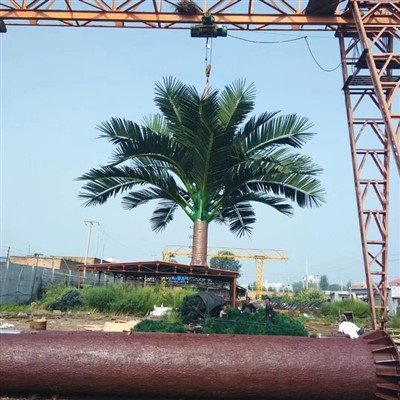
With the advancement of smart city construction, smart light poles, as a new type of urban infrastructure integrating multiple functions such as lighting, surveillance, communications, and environmental monitoring, are becoming increasingly important. However, smart light poles are technically complex and involve a wide range of disciplines. Failure to ensure adequate quality control not only impacts the equipment's service life and operational efficiency but may also pose safety risks. Therefore, establishing a scientific and systematic quality control system is crucial for the successful implementation of smart light pole projects.
I. Quality Characteristics and Challenges of Smart Light Poles
Quality control for smart light poles must cover four key dimensions: hardware, software, system integration, and long-term operation and maintenance. Core quality characteristics include:
1. Structural Safety: The main structure of the light pole must meet requirements for wind resistance, earthquake resistance, and corrosion resistance. Structural strength directly impacts public safety, especially in coastal or windy areas.
2. Electrical Reliability: The electrical performance of the power supply system, LED lighting modules, and communication equipment must be stable to prevent leakage, short circuits, and signal interference.
3. Functional Integration: The compatibility and data exchange accuracy of additional equipment such as cameras, sensors, and 5G micro base stations directly impact the implementation of smart functions.
4. Environmental Adaptability: The need to maintain normal operation in extreme environments such as high and low temperatures and humidity places higher demands on material weather resistance and process precision.
Currently, the industry faces major challenges including inconsistent equipment standards across multiple manufacturers, insufficient supervision during construction, and a lack of data support for long-term operations and maintenance. These challenges urgently need to be addressed through comprehensive quality control throughout the entire process.
II. Full Lifecycle Quality Control Strategy
(I) Design Phase: Standardization and Simulation Verification
Quality control must begin at the source. During the design phase, national standards (such as GB/T 35624-2017 "LED Public Lighting Intelligent System Interface Application Layer Communication Protocol") and industry specifications should be strictly adhered to, clarifying core indicators such as the light pole's mechanical structure, electrical parameters, and communication protocol. Furthermore, BIM (Building Information Modeling) and finite element analysis software should be used to simulate and verify the light pole's mechanical properties and heat dissipation efficiency to ensure the feasibility of the design.
(II) Raw Materials and Components Control
1. Supplier Management: Qualifications of suppliers of key materials, such as steel, aluminum, and electronic components, are reviewed and regularly evaluated, with preference given to ISO 9001-certified partners.
2. Incoming Inspection: Sampling tests are conducted on the luminous flux, color temperature, and protection level (IP65 and above) of lamps, as well as the transmission rate and anti-interference capabilities of communication modules, to prevent substandard products from entering the production line.
(III) Manufacturing Process Control
1. Process Standardization: Advanced processes such as automated welding and anti-corrosion spraying are employed to ensure uniform and flawless surface finishes on lamp poles. Internal weld defects are detected through X-ray inspection.
2. Assembly Precision Management: Detailed details such as sensor installation location and cable routing are strictly controlled to prevent functional failures due to human error.
(IV) Installation and Commissioning Phase
1. Construction Specifications: In accordance with the "Regulations for Construction and Acceptance of Urban Road Lighting Projects" (CJJ 89-2012), ensure that the concrete strength of the light pole foundation meets the standard, the grounding resistance is less than 4Ω, and lightning protection measures are complete.
2. System Integration: Conduct full-scenario testing of smart light poles' remote control, data upload, and multi-device collaboration functions, such as simulating automatic nighttime lighting adjustment and emergency alarm linkage.
III. Intelligent Inspection Technology and Long-Term Operation and Maintenance
1. Digital Inspection Methods: Introduce machine vision inspection equipment to automatically identify exterior defects (such as scratches and dents) on light poles, and utilize IoT sensors to monitor operating status (such as current and voltage fluctuations and tilt angle) in real time.
2. Closed Operation and Maintenance Data Loop: By establishing a smart light pole management platform, key indicators such as equipment failure rate and energy consumption data are recorded, and design and production processes are optimized in reverse, forming a virtuous cycle of "quality-operation-improvement."
Conclusion
Quality control for smart light poles is a systematic undertaking, encompassing the entire lifecycle from design and manufacturing to installation and operation and maintenance. Only through standardized design, rigorous process control, the application of intelligent testing technologies, and continuous data-driven optimization can we ensure that smart light poles fulfill their full potential in smart cities-improving urban management efficiency while ensuring public safety and sustainable development. In the future, with the further refinement of industry standards and technological advancements, the quality control of smart light poles will undoubtedly reach new heights.