

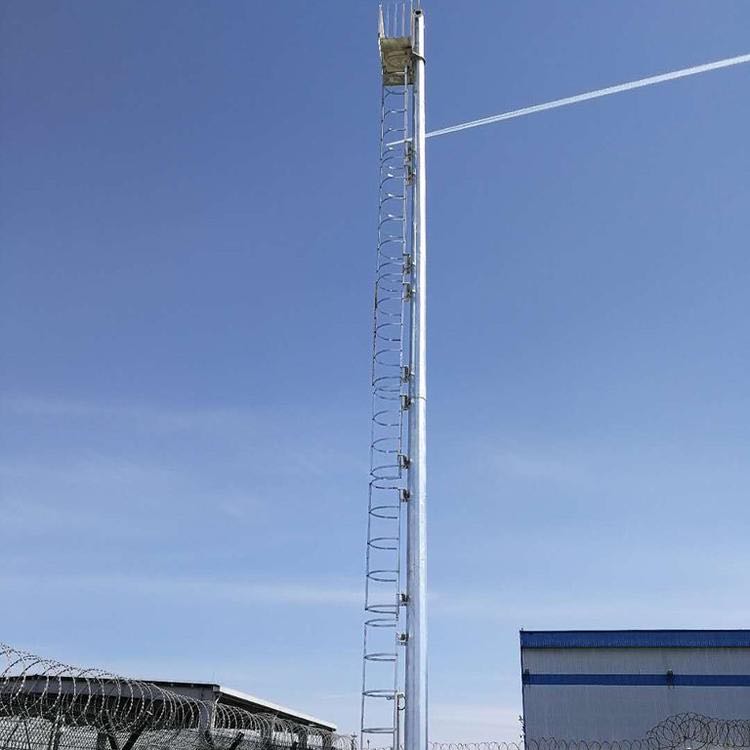
A higher camera position is useful only if the tower also accounts for the equipment that has to live on it. The Angle Steel Monitoring Tower uses a braced lattice frame to carry cameras, antennas, sensors and optional access platforms at selected elevations. Sections can be kept within 6m for transport and connected with M16-M30 high-strength bolts during erection. In practice, equipment weight is only one part of the layout. Wind area, bracket offset, cable route, maintenance access and the foundation can change where members or platforms are placed. A tower intended for one fixed camera can therefore look quite different from a tower carrying several devices at different levels, even when both are the same nominal height.
Components
• Angle-steel lattice frame and bracing that transfer equipment and wind loads to the foundation.
• Camera, antenna or sensor brackets located from the confirmed device list.
• Optional platform, ladder and access details for adjustment and maintenance work.
• Bolted section joints plus cable-support and lightning-protection fittings where required.
Product Parameters
|
Item |
Details |
|
Tower category |
Angle-steel tower |
|
Reference tower height |
10–120 m optional |
|
Tower cross-section |
Square, side width 1.5–6 m |
|
Segment height |
≤6 m per segment |
|
Angle steel specification |
L40×4–L200×20 |
|
Material |
Q235B / Q345B / ASTM A36 |
|
Connection method |
Bolted connection, M16–M30 high-strength bolts |
Product Advantages
The open lattice frame provides elevation without the weight of a solid mast of similar height.
Angle Steel Monitoring Tower mounting levels can be set around the actual devices rather than a fixed bracket pattern.
Transportable sections make road delivery and crane planning easier on sites with limited access.
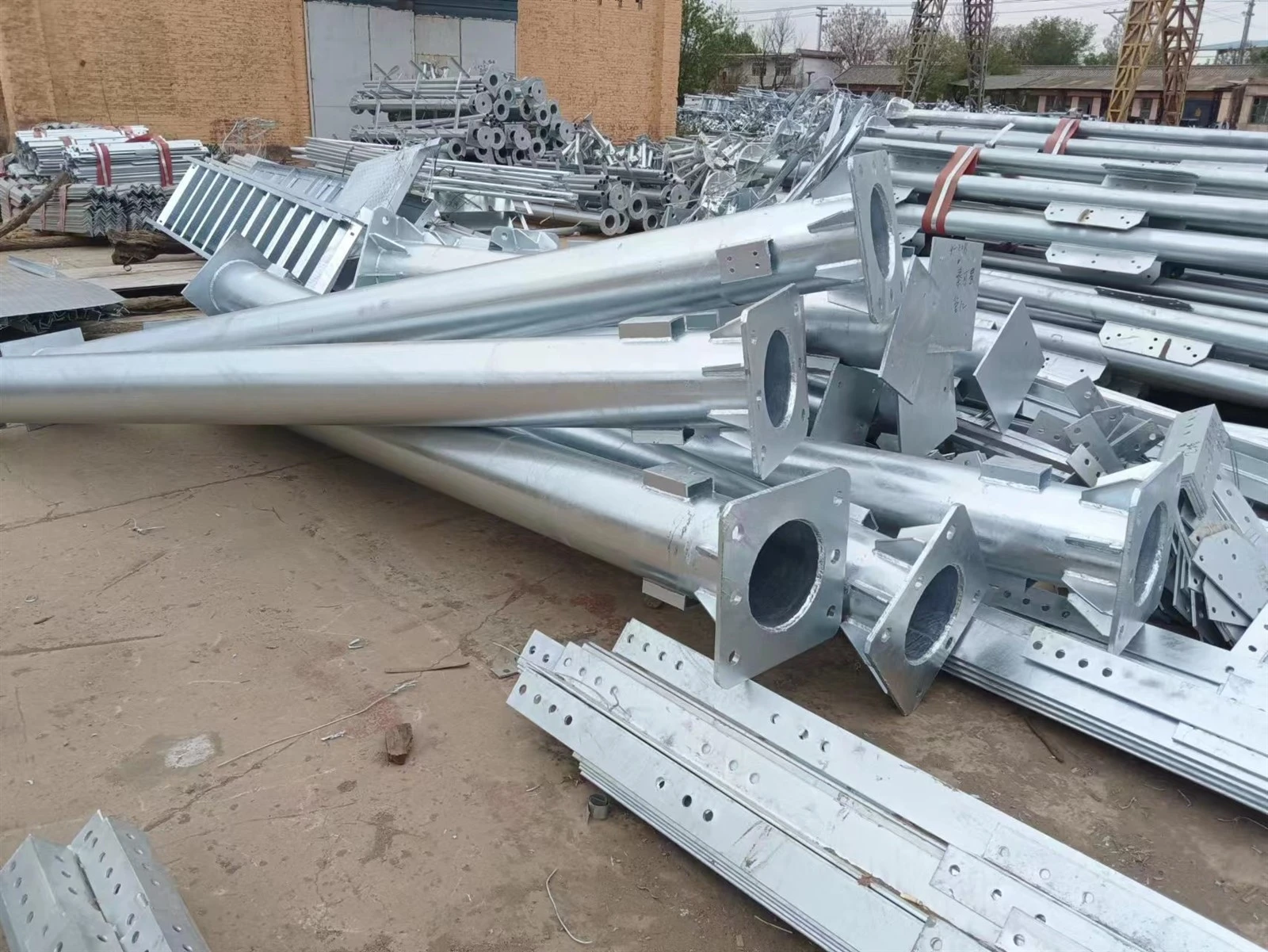
Galvanized steel can reduce routine coating work during long-term outdoor service.
Main Applications
• Perimeter surveillance around factories, parking areas, campuses and logistics yards.
• Forest-fire observation or remote sites where trees and nearby structures block a low camera position.
• Environmental and communication projects carrying cameras, weather sensors or light antenna equipment.

FAQ
Q: Can cameras and antennas share one tower?
A: They can, but device weight, projected wind area, mounting height and cable paths should be included before the structure is finalized.
Q: What usually causes late changes on an Angle Steel Monitoring Tower project?
A: Missing equipment dimensions, an altered camera height or an unplanned cable route can force bracket or platform changes after fabrication.
Q: Does every tower need a service platform?
A: No. A platform is useful where equipment needs regular hands-on access, but simpler layouts may use a ladder and dedicated mounting points instead.
Hot Tags: angle steel monitoring tower, China angle steel monitoring tower manufacturers, suppliers, factory, Meteorological Towers and Mast, steel watch tower, Structure Steel Monitor Tower, Telecom Tower Monitoring, Weather Monitoring Tower, Wind Measurement Tower


