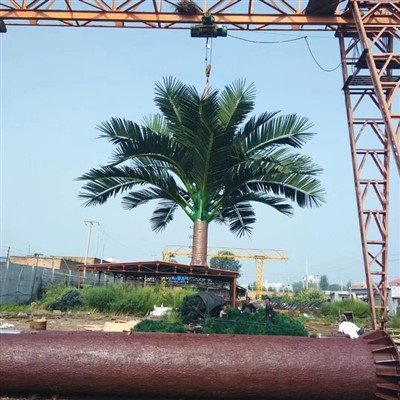
Communication towers, as the core infrastructure of modern communication networks, undertake the critical function of wireless signal transmission and coverage. Their technical characteristics directly impact communication quality, network coverage, and system stability. Therefore, a deep understanding of the technical characteristics of communication towers is crucial to the development of the communications industry.
First, the structural design of communication towers ensures high stability and wind resistance. Modern communication towers are typically constructed of steel or concrete, capable of withstanding extreme weather conditions such as strong winds, heavy rain, and even earthquakes. The towers are optimized based on precisely calculated wind and seismic loads, ensuring stability in harsh environments. In addition, the towers are typically equipped with lightning protection devices to protect communication equipment from lightning damage.
Second, communication towers offer a high degree of flexibility and scalability. Depending on different communication needs, communication towers can be divided into various types, including free-standing towers, guyed towers, and mast towers. Free-standing towers are suitable for scenarios with high loads and wide coverage, while guyed towers are suitable for areas with complex terrain or load-bearing restrictions. Furthermore, communication towers can accommodate a variety of communication equipment, such as macro base stations, micro base stations, and antenna arrays, to meet the diverse needs of 2G, 3G, 4G, and even 5G networks.
Furthermore, communication towers are continuously advancing in intelligent management. Modern communication towers are often equipped with remote monitoring systems that provide real-time monitoring of equipment operating status, environmental parameters (such as temperature and humidity), and power supply conditions, improving operational efficiency and reducing the risk of failures. Furthermore, some communication towers utilize renewable energy sources, such as solar or wind power, to reduce reliance on traditional power grids and enhance sustainability.
In summary, the technical characteristics of communication towers, reflected in their structural stability, flexible adaptability, and intelligent management, are essential cornerstones for the efficient operation of modern communication networks. With the development of 5G and future communication technologies, communication towers will continue to evolve towards greater efficiency and intelligence.